
By Richard Ginsburg, CEO of Alert 360
Home security during renovation deserves a place on your project checklist. Between choosing materials, coordinating contractors and managing a budget, it’s easy to overlook how construction changes the way your home is protected.
A lot of our customers are remodeling or expanding their homes. Others face the much more personal challenge of rebuilding after a loss. Whatever brings you to a construction project, protecting your property should be part of the plan from the beginning.
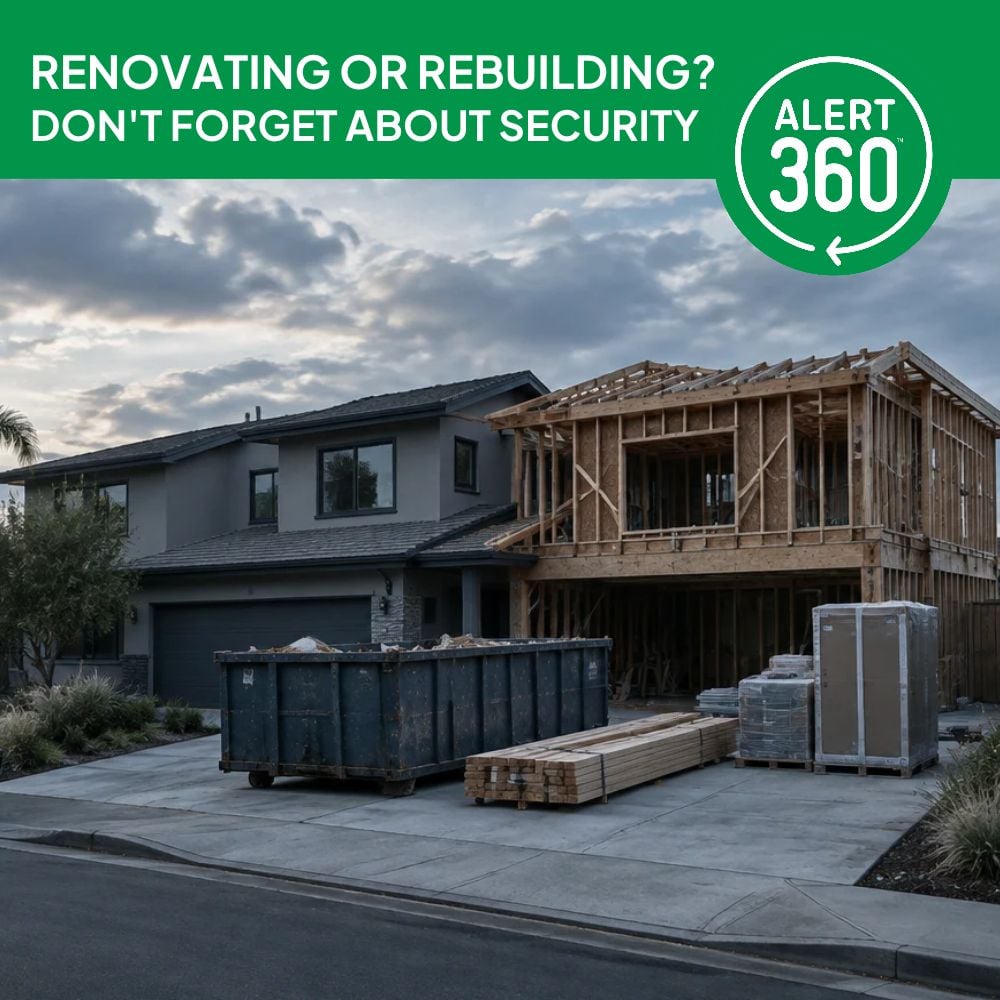
Contractors and subcontractors come and go throughout the day. Doors and gates stay open. Alarm sensors may be bypassed so crews can work. Meanwhile, valuable tools, appliances and building materials may sit outside.
Even the dumpster out front and delivery trucks on the street can signal that your property is more accessible than usual.
Fortunately, a few practical steps can help you maintain security throughout the project.
1. Control Who Has Access to Your Home
Avoid sharing your everyday alarm or door code with everyone working on your renovation. Instead, create individual or temporary codes whenever your system supports them.
This makes access easier to manage and allows you to remove a contractor’s code when their work is complete. Also, agree on arrival times, departure times and who is responsible for securing the property.
Alert 360 smart locks offer features such as code management, remote locking and activity notifications. With compatible equipment, you can manage access without leaving a spare key outside.
2. Keep Track of Bypassed Security Sensors
Replacing a door or window may require temporarily bypassing an alarm sensor. However, a bypassed sensor leaves that opening outside your normal alarm protection.
Before work begins, ask your security provider how to handle affected equipment. Then, check each day that any sensors ready to return to service are active again.
If an opening cannot be secured overnight, discuss temporary protection with your contractor and security team.
Door, window, motion and glass break sensors from Alert 360 help protect different areas of your home. As construction progresses, make sure that coverage still matches your property.
3. Make an End-of-Day Security Walkthrough a Habit
Don’t assume the last person leaving has locked everything. A short walkthrough can catch an open window, an unsecured gate or an alarm that was never armed.
Before the crew leaves, check that:
- Exterior doors, windows and gates are closed and locked.
- Tools and materials are secured.
- Cameras have clear views.
- Any temporary sensor bypasses have been reviewed.
- Your alarm is armed appropriately for the home’s condition and occupancy.
If you’re staying elsewhere during construction, designate someone to complete this check. Compatible Alert 360 smart home systems also provide connected controls that help you manage your property while you’re away.
4. Secure Tools, Appliances and Building Materials
New appliances, power tools and construction materials can represent a significant investment before they ever become part of your finished home.
Whenever possible, arrange deliveries close to installation dates. Ask contractors to secure equipment overnight, and keep valuable items in a locked building or storage container.
Additionally, consider where deliveries are placed. Materials left near the street are easier to see and access.
Outdoor security cameras can add visibility around driveways, entrances and storage areas. Review camera placement as deliveries, dumpsters and scaffolding change the layout of your site.
5. Update Your Security Coverage as the Project Changes
Home security during renovation isn’t a one-time conversation. A new addition, relocated entrance or larger window can change what your system needs to protect.
Even landscaping and temporary fencing can affect camera views. For that reason, include your security provider in project planning before walls are closed and finishes are installed.
Discuss whether your updated home needs additional sensors, repositioned cameras or changes to its smart home equipment. Planning early helps your security team account for the finished layout.
6. Consider Mobile Surveillance for Major Renovations
A major renovation or rebuild may leave your property without its permanent security system for an extended period. During that time, a mobile surveillance unit can provide an additional layer of protection.
Alert 360 Mobile Surveillance Units combine solar-powered equipment, camera coverage and live video monitoring for construction sites and other temporary locations.
Through Alert 360 Video Shield, trained monitoring professionals can review triggered video events and respond according to the site’s security plan. Depending on the setup, that can include audible warnings, contact notifications or escalation to authorities.
For projects with exposed equipment, valuable materials or extended vacancies, ask our team whether mobile surveillance is a good fit.
Review Your Home Security After the Renovation
Once construction is complete, add a security review to your final project checklist.
Delete contractor access codes and temporary users. Confirm that bypassed zones have been restored. Coordinate sensor testing with your security provider, and check that cameras cover the entrances and outdoor areas you now use.
Most importantly, make sure your system protects the home you have today.
Whether you need updated sensors, smart locks, outdoor cameras or temporary job-site monitoring, our team can help you plan home security during renovation and beyond.
Request a free security quote from Alert 360 to discuss your project.
Your home is changing. Make sure your security changes with it.