
The best way to secure your home from intruders is to make it harder to get in, harder to approach without being seen, and impossible to enter quietly. You don’t need to do everything at once. Work through the twelve steps below in order; the first few cost almost nothing, and the last few are what turn a locked house into a protected one.
Start at the doors
- Upgrade the deadbolt and the strike plate. Most forced entries go through a door, and the weak point is usually the short screws holding the strike plate to the frame. A solid deadbolt plus 3-inch screws driven into the stud makes a kick far less likely to work.
- Lock up every time, including the door from the garage. The garage entry door is often the least secure door in the house and the one people forget. Treat it like a front door.
- Stop hiding keys. Under the mat, in the planter, on top of the frame: intruders check the same places you do. A keyless or smart lock gives family and trusted visitors their own codes instead. We covered the alternatives in Stop Hiding Keys Under the Mat.
Take away the cover
- Light the approaches. Motion-activated lights at the front door, driveway, side yards and back patio remove the dark corners an intruder needs. Well-lit areas also help cameras capture a usable image.
- Trim shrubs below the windows and put the ladder away. Hedges that hide a window hide a person. A ladder left against the fence is an invitation to the second floor. Simple yard maintenance goes a long way.
- Keep valuables out of sight. Close blinds at night, move the laptop off the table by the window, and break down the box the new TV came in before trash day.
Make the house look occupied
- Put lights on a schedule. Smart lighting that varies by room and time of day looks far more natural than one lamp on a timer. If your lights, locks and thermostat are part of your security system, you can run scenes from one app.
- Pause deliveries and keep travel off social media. A pile of packages on the porch or a week of vacation photos tells anyone watching that nobody is home. Have a neighbor collect packages, or hold them until you’re back.
Add layers that alert someone
Everything above makes your home a harder target. These last four steps make sure that if someone tries anyway, somebody finds out immediately.
- Door, window and motion sensors. Sensors on the doors and ground-floor windows, plus a motion detector covering the main hallway, catch an entry the moment it happens.
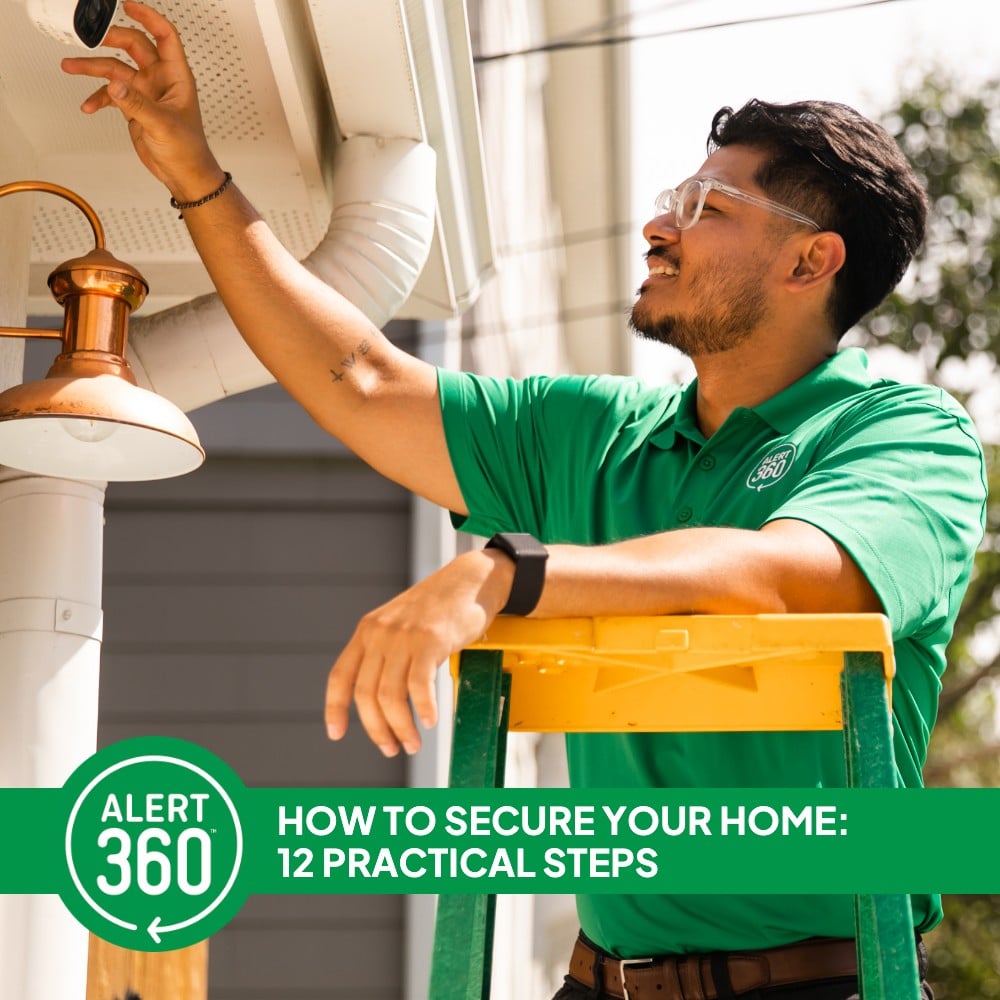
- A video doorbell and outdoor cameras. A video doorbell lets you answer the door from anywhere, which stops the “knock to see if anyone’s home” test. Outdoor cameras covering the driveway and back door record what the lights revealed.
- Glass-break detection. A sensor that listens for the sound of breaking glass covers the windows you can’t put a contact sensor on, including large picture windows and sliding doors.
- Professional monitoring. A siren that nobody responds to is just noise. With monitoring, a trained team sees the alarm, verifies it, and contacts emergency services if you can’t be reached. That’s the difference between a system that records a break-in and one that interrupts it.
Monitored alarm or DIY: which one secures your home?
A DIY kit can cover steps 9 through 11 reasonably well if you’re comfortable placing sensors and managing the equipment yourself. What it usually can’t do is step 12. With a professionally installed and monitored system, a technician decides where sensors and cameras belong for your floor plan, confirms every device is reporting, and your home is watched around the clock by a UL Listed monitoring center. Alert 360 has monitored homes since 1973, and our monitoring operations have been UL Listed since 2000 and TMA Five Diamond certified since 2018. Read The First 30 Seconds for what actually happens when an alarm comes in.
Where we can help
Alert 360 installs and services systems across the country, with local technicians in markets including Houston, Phoenix and Atlanta. Wherever you are, the first step is the same: a security specialist walks through your home’s entry points with you and builds a system around them.
Frequently asked questions
What is a home security system and how does it work?
A home security system is a network of devices designed to detect and alert you to threats like intrusions, fires, or floods. Sensors placed on doors, windows, and throughout your home communicate with a central control panel. When a sensor is triggered, the system sends an alert to you and, if you have professional monitoring, to a team that can dispatch emergency services.
What types of threats can a security system detect?
Beyond intrusions, today’s systems can detect fires, carbon monoxide, flooding, and even glass breaks. Some advanced setups offer medical alert buttons for emergencies. The more comprehensive your system, the better protected you and your loved ones are.
What happens if my alarm is triggered?
If you have professional monitoring, the team will contact you to verify the alarm. If they can’t reach you or confirm a threat, they’ll dispatch emergency services. If you’re self-monitoring, you’ll receive an alert on your phone and can decide how to respond.
What is professional monitoring, and why is it important?
Professional monitoring means a trained team watches over your system 24/7. If an alarm is triggered, they verify the threat and contact emergency services on your behalf. It adds a critical layer of protection, especially when you’re asleep, away, or unable to respond.
Ready to secure your home?
Two easy ways to start: request a free quote online and a security specialist will reach out, or call (833) 360-1595 for new service. Professional installation is scheduled at your convenience by a local technician.